Brown patches on the cheeks that will not fade, dark marks left behind after acne, or small spots on the hands after years of sun? These are all forms of pigmentation, and they are among the most common skin questions we hear at the pharmacy. The good news is that most of them improve with a simple plan and patience, as long as the plan starts with sun protection and the products are safe and from a known source.
What is hyperpigmentation?
Hyperpigmentation means areas that are darker than your natural skin tone. It happens when the pigment cells in the skin produce extra melanin, the substance that gives skin its colour. Pigmentation is usually not a sign of a serious disease, but it affects confidence, and you need to know its type before choosing a treatment. Our goal here is to even out skin tone and fade spots, not to change your natural skin colour.
The most common types
Sun spots
Small, well-defined brown spots on the face, the backs of the hands and the shoulders, the areas that get the most sun. They increase with age and with years of repeated sun exposure without protection.
Post-acne and post-inflammatory marks
After a pimple, a wound or an itchy rash heals, it may leave a brown or dark mark. This is very common in medium and darker skin tones. Picking or squeezing pimples makes the mark darker and longer-lasting. These marks often fade with time, and treatment plus sun protection help them fade faster.
Melasma
Brown or grey-brown patches, usually symmetrical on the cheeks, forehead and above the upper lip. Melasma is linked to hormones, so it often appears during pregnancy (sometimes called the mask of pregnancy) and can appear with birth control pills. Sun and heat make it worse, and genetics play a role. Melasma is a chronic condition: it improves with treatment but can return if protection stops.
Why does the Iraqi sun make pigmentation worse?
In Iraq we have a long summer and strong sun for most of the year. Ultraviolet rays directly stimulate pigment cells, and heat and visible light may also worsen melasma. Even on cloudy days, or inside a car behind glass, part of the radiation still reaches the skin. That is why using a pigmentation cream without sunscreen is like filling a leaking bucket: effort and money with no result.
Sunscreen: the foundation before any treatment
No pigmentation treatment works without daily sun protection. The key tips:
- Use a broad-spectrum sunscreen with SPF 30 or higher every morning, summer and winter, even if you stay at home near windows.
- Apply enough, roughly two finger-lengths for the face and neck. A very thin layer gives much less protection than the label says.
- Reapply every two hours when you are outside, and after sweating or washing your face.
- If you have melasma, tinted sunscreens may help more because they block part of visible light.
- Add a wide-brimmed hat, sunglasses and shade, and avoid direct midday sun as much as possible.
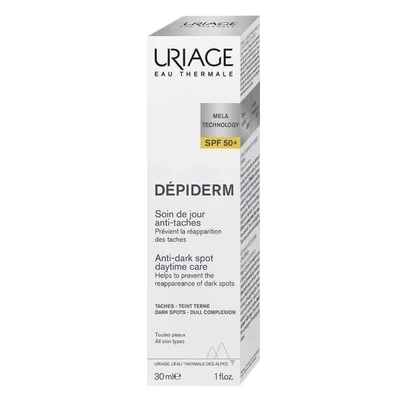
You can also use a day cream made for spots under your sunscreen, such as Uriage Depiderm Anti-Dark Spot Daytime Care, which is designed for daily use on the face and neck. However, it does not replace sunscreen unless the pack states a clear SPF.
Ingredients that help even out skin tone
Most pigmentation products rely on a small number of well-known ingredients. Understanding them helps you choose instead of buying many similar products:
- Niacinamide: a form of vitamin B3 that reduces the transfer of pigment to the skin surface and strengthens the skin barrier. Gentle and suitable for most people.
- Vitamin C: an antioxidant that reduces pigment formation and gives the skin a brighter look. Best used in the morning under sunscreen.
- Tranexamic acid: used on the skin for melasma and stubborn spots, and usually well tolerated.
- Licorice extract: a soothing plant ingredient that helps fade spots and suits sensitive skin.
- Hydroquinone: one of the strongest known ingredients for fading pigmentation, but it needs special care, explained in detail below.
| Ingredient | What it does | Who it suits | Caution |
|---|---|---|---|
| Niacinamide | Reduces pigment reaching the skin surface and strengthens the barrier | Most skin types, including oily and acne-prone skin | May cause mild redness in some people |
| Vitamin C | Antioxidant that reduces pigment formation and adds radiance | Dull skin and sun spots | May sting sensitive skin; keep away from heat and light |
| Topical tranexamic acid | Fades melasma and stubborn spots | Melasma and post-acne marks | The oral tablets are a medicine taken only on a doctor's prescription |
| Licorice extract | Soothes the skin and fades spots | Sensitive skin | Allergy is rare; test on a small area first |
| Hydroquinone | Strongly reduces pigment production | Melasma and stubborn spots under medical guidance | Short courses only, not in pregnancy, irritating if misused |
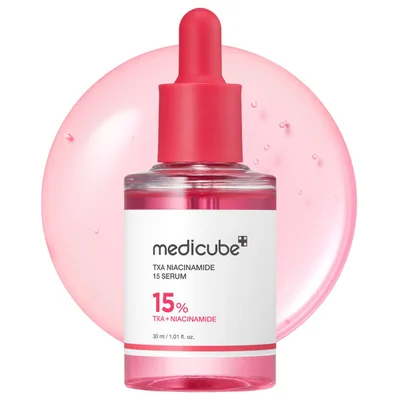
If your skin is oily or has acne marks, the Medicube TXA Niacinamide Serum combines tranexamic acid and niacinamide in one product and is a gentle way to start a routine.
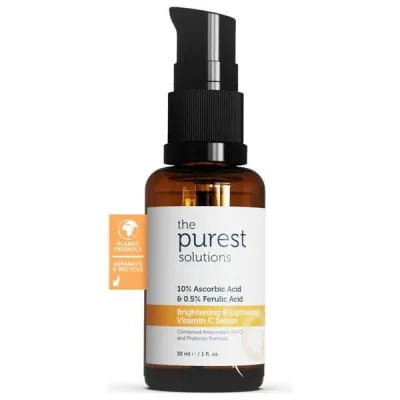
If you want more radiance for dull skin along with fading spots, the purest Vitamin C Brightening Serum is used in the morning before sunscreen.
Hydroquinone: effective but needs caution
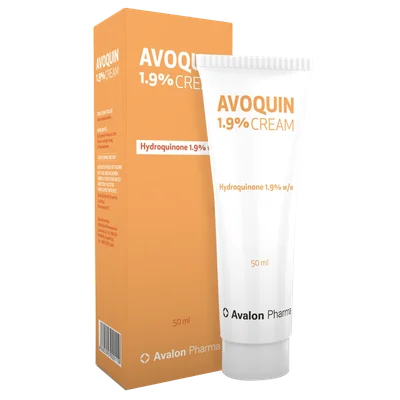
Hydroquinone blocks the enzyme responsible for making pigment, which is why it often works faster than most ingredients. One example at the pharmacy is Avoquin 4% cream, which contains hydroquinone. We advise using it according to these rules:
- Use it only as the leaflet says or as your doctor directs, and on the spots only, not on the whole face.
- It is used for a limited period and then stopped as your doctor advises. Long, uninterrupted use can cause a permanent blue-grey darkening of the skin that is hard to treat.
- Do not use it during pregnancy, and if you are breastfeeding, ask your doctor first.
- Do not combine it with strong exfoliants, retinoids or benzoyl peroxide at the same time unless a doctor tells you to, as this increases irritation.
- Test it first on a small area for two days. If you get strong redness, burning or peeling, stop and talk to us.
- It does not work without daily sunscreen; sun exposure quickly undoes the result.
Beware of mixed creams sold in markets
Markets and social media are full of mixed creams with no name, no label and no date that promise results within days. These creams may contain strong cortisone, which causes skin thinning, acne, hair growth, visible blood vessels and stretch marks, and the spots come back worse when it is stopped. Some may contain mercury, a toxic substance that can harm the kidneys and nerves and can reach children at home through touch. Others may contain hydroquinone at an unknown strength. The rule is simple: any product without a clear label, or one that promises a fast magical result, should not go on your skin.
How long until you see results?
Pigmentation does not disappear in a week. The first improvement usually shows after several weeks, and a clear result usually needs 8 to 12 weeks of regular use together with sunscreen. Acne marks usually improve faster, while melasma takes longer and may return with summer or hormonal changes, so protection continues even after improvement. Start with one product, add a second after two weeks if your skin tolerates it, and do not switch products every week.
When should you see a doctor?
- A spot that changes in size, colour or shape, has irregular borders, contains more than one colour, bleeds or does not heal.
- Melasma that appears during pregnancy, so the doctor can choose what is safe for you and your baby.
- No improvement after three months of regular use with sunscreen.
- Pigmentation that appears suddenly and widely, after starting a new medicine, or with other symptoms such as persistent tiredness or weight change.
- Irritation, burning or darkening that got worse after using any cream.
Frequently asked questions
Does melasma go away for good?
Melasma can improve a lot and be kept under control, but it may return with sun, heat or hormonal changes. That is why sunscreen stays a permanent part of the routine.
Can pigmentation be treated during pregnancy?
During pregnancy the priority is sunscreen, a hat and shade. Hydroquinone is not used in pregnancy, and any other product is best used with your doctor's approval. Many cases of pregnancy melasma fade after delivery.
Are lemon and home remedies helpful?
We do not recommend them. Lemon is acidic and irritates the skin, and it can cause burns and darker spots if the skin is exposed to the sun afterwards.
Can I use more than one serum at the same time?
Start with one product plus sunscreen. You could, for example, use vitamin C in the morning and another product in the evening, but many strong products together increase irritation, and irritation itself can cause new pigmentation.
If you are not sure about your type of pigmentation or the right product for your skin, message the Green Heart Pharmacy pharmacist on WhatsApp and we will help you choose safely.