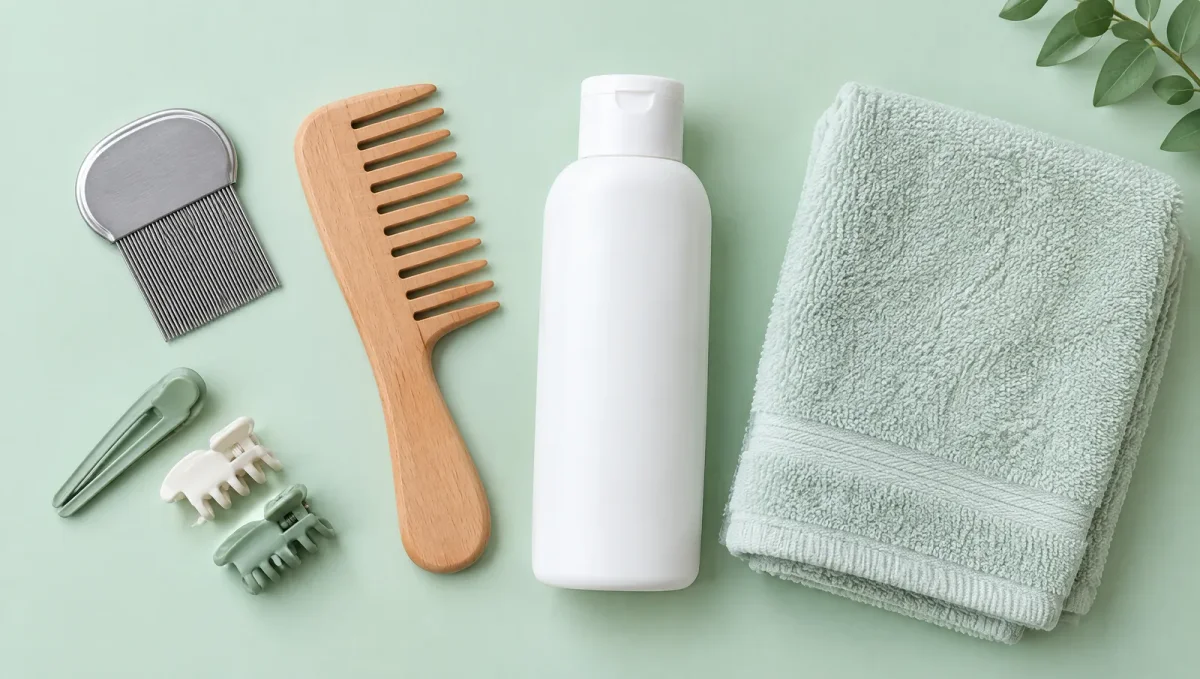
Many parents discover head lice on their children suddenly, often after days of repeated scratching. The good news is that lice are annoying but do not spread serious diseases, and they can be cleared at home with the right steps and some patience. In this article we explain how to recognise lice, how to treat them safely, and how to stop them coming back to your family and school.
What are head lice?
A head louse is a small wingless insect, about the size of a sesame seed, grey or light brown in colour. It lives on the scalp and feeds on small amounts of blood. The female lays eggs, called nits, and glues them firmly to the hair shaft close to the scalp.
It helps to know these facts:
- Lice do not fly or jump. They usually spread through direct head-to-head contact during play or shared sleeping.
- They can occasionally spread through shared combs, hats, pillows and towels, but this is less common.
- Head lice are not a sign of poor hygiene. They affect clean and dirty hair alike.
- Pets do not pass head lice to people.
How do you know your child has lice?
Common signs
- An itchy scalp, especially behind the ears and at the back of the neck.
- A feeling of something moving in the hair.
- Small white or yellowish dots stuck to the hair near the roots that do not fall off easily when blown or shaken.
- Scratches or redness on the scalp from scratching.
Note that itching may not appear in the first weeks of an infestation, and some children never feel it at all.
Nits versus dandruff
Dandruff falls off easily when the hair moves, while nits stay stuck to the hair shaft and only come off when pulled with the fingernails or a fine-tooth comb. Finding nits alone does not always mean an active infestation, because empty eggshells can stay in the hair after treatment. The clearest proof is seeing a live louse.
How to check with wet combing
- Wet the hair and apply a little conditioner to make combing easier.
- Detangle the hair with a regular comb first.
- Use a fine-tooth lice comb, working from the scalp to the ends, section by section.
- Wipe the comb on a white tissue after each stroke and check what is on it.
- Repeat the check for everyone living in the same home.
Treating lice at home
Pharmacies carry products made specifically for head lice, and they usually work in one of two ways: products with a physical action that coats the lice, and products that contain a lice-killing ingredient. The most important rule in every case: read the enclosed leaflet and follow it exactly, including the suitable age, how long to leave the product on the hair, and when to repeat treatment, if needed.
Products with a physical action
Nitolic Lice Spray with Comb from ICB Pharma is an example of this type. The manufacturer describes it as a medical device that coats lice and their eggs and blocks their breathing passages so they dry out and die. It is free of insecticides, and because its action is physical, lice cannot develop resistance to it. The leaflet states that one application is usually enough, combined with daily combing for one week. The pack contains the spray and a special comb for lice and nits.
If more than one family member is affected, the Nitolic Lice Treatment System may suit you. It contains the same spray and comb, plus a nit remover, a laundry additive, a protective cap and a tracking chart. According to the manufacturer, it is suitable for adults and for children from 2 years of age.
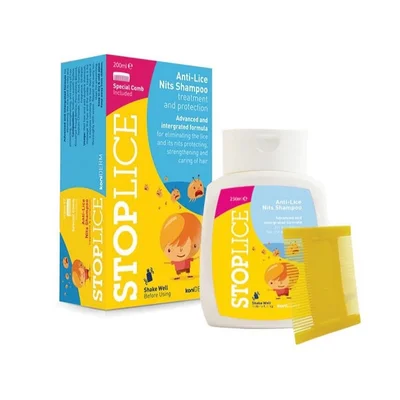
Anti-lice shampoos
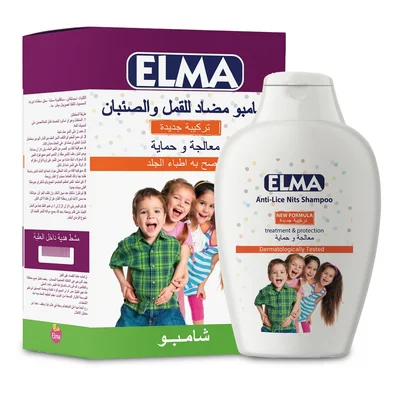
Elma Anti-Lice Shampoo contains permethrin, an ingredient that paralyses and kills lice. Use it exactly as the leaflet explains, keep it away from the eyes, and check the minimum permitted age before using it on young children.
Tips for successful treatment
- Treat only people in whom live lice have been found, and check everyone else. Do not use lice products for prevention.
- Treat everyone affected in the home on the same day, so lice do not pass back from one person to another.
- Do not combine several products at the same time, and do not use more product or more applications than the leaflet says.
- Check again with the fine-tooth comb after treatment and over the following days, because eggs that survived may hatch within about a week.
- Itching can continue for a few days after treatment. This does not necessarily mean the treatment failed.
Removing nits
Removing nits by hand is an important step that lowers the chance of the infestation returning. Divide the hair into small sections, run the fine-tooth comb from roots to ends, and pull off stuck eggs between your fingernails when needed. Set aside a calm time for this and reward your child for their patience. Daily combing over several days makes a big difference.
How to stop lice coming back at home and school
- Wash pillowcases, towels and hats used in the two days before treatment in hot water, then dry them well.
- Items that cannot be washed, such as some soft toys, can be sealed in a closed bag for two weeks.
- Soak combs and hairbrushes in hot water, and do not let children share combs or hats.
- Vacuum floors and furniture. There is no need to spray insecticides around the home; they do not help and may cause harm.
- Tie back or braid long hair when girls go to school.
- Gently let the school, or the parents of your child's close friends, know so they can check their children and the spread between children stops.
- Check children's heads with a fine-tooth comb regularly, especially when you hear of cases in the class.
A child usually does not need a long absence from school and can return after starting proper treatment, following the school's own rules.
Common and dangerous myths
- Kerosene and petrol: among the most dangerous practices. These substances are flammable and can cause severe burns, skin irritation and poisoning when inhaled. Never use them.
- Household or agricultural insecticides: they are not designed for human skin and can cause poisoning, especially in children. Use only lice products made for people.
- Shaving the whole head is necessary: not true. The right treatment with combing is enough in most cases, without embarrassing the child.
- Vinegar, oils and mayonnaise kill lice: there is not enough evidence that they work, and they can delay proper treatment.
- Lice mean neglect: not true. Any child can get them.
When should you see a doctor?
- If the child is a baby or younger than the minimum age stated on the product leaflet.
- During pregnancy or breastfeeding, before using any product.
- If there are signs of scalp infection, such as pus, crusting or swelling, painful swollen glands in the neck, or fever.
- If live lice remain after correct treatment and repeat checks as the leaflet directs.
- If lice are found in the eyelashes or eyebrows.
- If there is an allergy or a skin condition on the scalp, or a reaction appears after using the product.
Frequently asked questions
Do lice live long off the head?
No. Lice need the scalp to feed and usually do not survive away from it for more than a day or two. That is why we focus on washing only items used recently.
Should I treat the whole family?
Check everyone, and treat only those who have live lice, making sure everyone affected is treated on the same day.
Why did the lice come back after treatment?
Common reasons are not following the leaflet exactly, not removing nits, or a new infestation from someone else at home or school. If it keeps happening despite careful treatment, see a doctor or pharmacist to choose a different type of treatment.
Can lice treatment be used for prevention?
No. These products are for treatment only. Prevention means regular checks and not sharing combs and hats.
If you have a question about choosing the right product for your child's age or your situation, message our pharmacist on WhatsApp and we will be happy to help.