After the age of 40, many men notice small changes in how they urinate: getting up repeatedly at night, a weaker stream than before, or a feeling that the bladder has not emptied completely. These changes are common, and they are most often caused by benign prostate enlargement. But being common does not mean they should be ignored. In this article we calmly explain what is happening, when you need a doctor, what you can do in your daily life, and what the real role of herbal supplements is.
What is the prostate and why does it grow with age?
The prostate is a small gland, roughly the size of a walnut, that sits below the bladder and surrounds the tube that carries urine out. With age, this gland slowly grows in most men, which is linked to natural hormonal changes. As it grows, it can press on the urine tube and cause symptoms. This is called benign prostatic hyperplasia (BPH), and "benign" means it is not cancer.
Common symptoms of prostate enlargement
- Frequent urination, especially at night.
- A weak or interrupted urine stream.
- Difficulty or delay in starting to urinate.
- A sudden, urgent need to urinate.
- Dribbling after finishing.
- A feeling that the bladder has not fully emptied.
How severe the symptoms are does not always match the size of the prostate. Some men have a large prostate and mild symptoms, and the opposite is also true.
Why start with a doctor, not a supplement?
The same urinary symptoms can come from different causes: a urinary tract or prostate infection, poorly controlled diabetes, stones, a problem with the bladder itself, and sometimes prostate cancer. That is why you should not treat yourself with a supplement before a doctor knows the cause.
Your doctor may request a urine test and a blood sugar test, may examine the prostate, and may order a PSA (prostate-specific antigen) blood test or an ultrasound. Whether to do a PSA test, and how to interpret it, is the doctor's decision, because it depends on your age, your family history and your overall health. If your father or brother had prostate cancer, tell the doctor from the start.
The good news is that BPH has effective prescription treatments, and other procedures are available when needed. Supplements do not replace these treatments.
Daily habits that ease symptoms
- Fluid timing: Drink enough water during the day, and cut down on drinks about two hours before bed. Do not cut water too much; dehydration concentrates urine and irritates the bladder.
- Caffeine: Tea, coffee and energy drinks increase urine output. Reduce them, especially in the evening.
- Weight and activity: Excess weight and inactivity are linked to worse urinary symptoms. A 30-minute daily walk is a simple, useful step.
- Do not hold urine for long, and try "double voiding": after finishing, wait a moment and then try again.
- Constipation: It adds pressure on the bladder, so eat vegetables and fibre.
- Review your medicines: Some cold and allergy medicines that contain decongestants or antihistamines can make urination harder for men with an enlarged prostate. Ask the pharmacist before using them.
Herbal prostate supplements: what does the evidence honestly say?
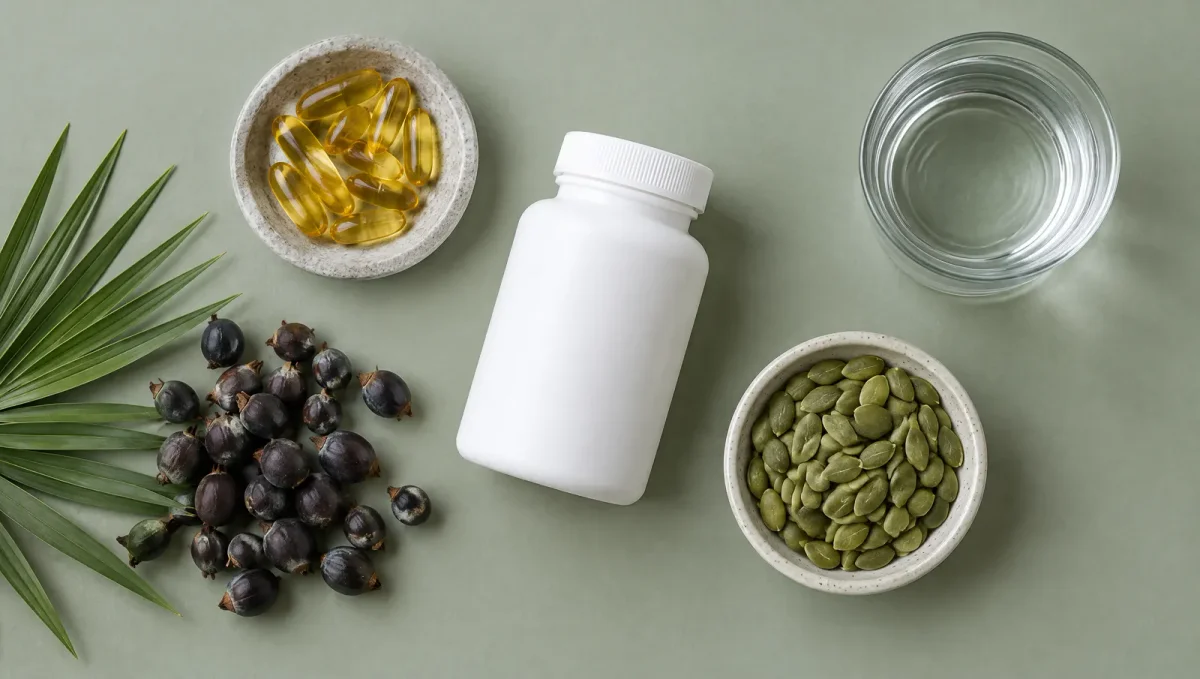
The three best-known herbal ingredients used for prostate support are saw palmetto, pumpkin seed oil and stinging nettle root. Some men feel a mild improvement in symptoms with them, but study results are mixed, and some large scientific reviews found no clear difference compared with placebo. So these are supportive supplements, not a cure, and they have not been shown to shrink the prostate.
| Supplement | What it is | Evidence level | Caution |
|---|---|---|---|
| Saw palmetto | Extract of the berries of a small palm | Mixed; recent reviews found no clear benefit | Tell your doctor if you take blood thinners or are preparing for surgery |
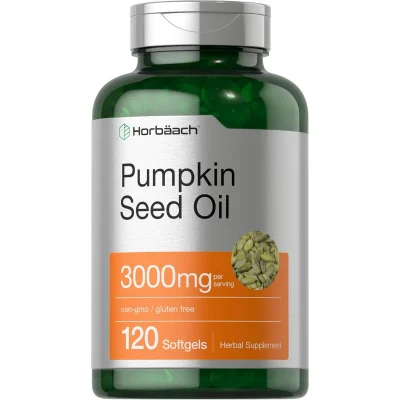
| Pumpkin seed oil | Oil rich in fatty acids and antioxidants | Small studies suggest a possible mild improvement | Generally well tolerated; may cause mild stomach upset |
| Nettle root | Extract of stinging nettle root | Limited and mixed, often studied with other ingredients | May interact with some blood pressure, diabetes and diuretic medicines |
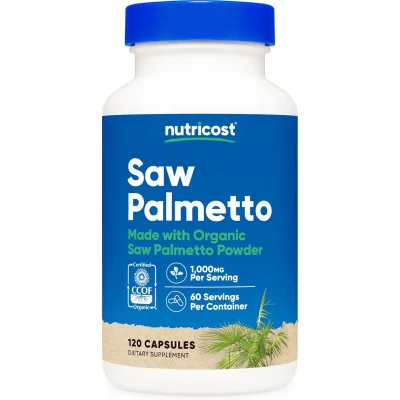
If your doctor agrees to a trial of a supportive supplement, one option we stock is Nutricost Saw Palmetto, a saw palmetto supplement.
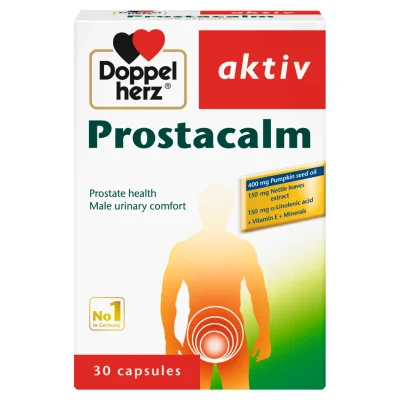
For those who prefer a formula that combines more than one ingredient, Doppelherz Prostacalm contains pumpkin seed oil and nettle leaf extract.
Important rules: Do not stop a prostate medicine your doctor prescribed in order to replace it with a supplement. Tell your doctor about any supplement you take, especially if you use blood thinners such as warfarin or daily aspirin. Do not combine several prostate supplements without advice. And if you notice no difference after several weeks, or your symptoms get worse, see your doctor.
Multivitamins and men's vitality
Tiredness and low energy after 40 have many causes: poor sleep, stress, anaemia, low vitamin D, thyroid problems and diabetes. So if tiredness persists, it is best to have some simple tests done by a doctor. Multivitamins made for men may help fill a nutritional gap in someone who does not eat a varied diet, but they do not replace healthy food, good sleep and movement. A well-known option is Vitabiotics Wellman, a vitamin and mineral formula designed for men.
Male fertility supplements in brief
When a couple is having difficulty conceiving, both partners should be checked together, and a man's assessment usually starts with a semen analysis requested by a doctor. After diagnosis, the doctor may suggest a supportive supplement containing vitamins, minerals and antioxidants, such as Vitabiotics Wellman Conception.
These supplements may support sperm health, but they do not treat medical causes such as a varicocele or hormonal disorders, and they do not replace follow-up with a doctor.
When should you see a doctor?
Book a doctor's appointment soon if you develop new urinary symptoms, or if they affect your sleep and daily life. The following situations are urgent and need the emergency department or a doctor on the same day:
- Being completely unable to pass urine, with pain or swelling in the lower belly.
- Blood in the urine, even if it appears only once and without pain.
- Fever or chills with burning or pain when urinating.
- Severe pain in the lower belly, the side, the back, or the area between the scrotum and the anus.
- Sudden leakage of urine that you cannot control.
Also tell your doctor without delay if you notice unexplained weight loss or persistent bone pain along with urinary symptoms.
Frequently asked questions
Does frequent night-time urination mean I have prostate cancer?
Not necessarily. The most common cause is benign enlargement, and there can be other causes such as diabetes or drinking a lot in the evening. Only a doctor can tell the difference after an examination.
Can saw palmetto replace my prostate medicine?
No. The evidence for herbal supplements is mixed, while the medicines a doctor prescribes have proven effectiveness. Do not stop your medicine without consulting your doctor.
At what age should I ask my doctor about a PSA test?
Many doctors discuss this test with men from around age 50, and earlier when there is a family history. The decision is made with you, based on your situation.
Are prostate supplements safe with blood thinners?
Some may raise the chance of bleeding when combined with blood thinners. Tell your doctor and pharmacist about everything you take before starting any supplement.
How long should I wait to know whether a supplement helps me?
Herbal supplements usually need several weeks. If your symptoms do not improve or get worse, see your doctor and do not increase the dose on your own.
Have a question about your symptoms or any product? Message the pharmacist at GH Pharmacy on WhatsApp, and we will be happy to help.