Many people notice more hair than usual on the pillow, in the comb or in the shower, and start to worry. The good news is that hair loss is very common, and many of its causes have clear solutions. In this article we explain the main causes of hair loss in men and women, how minoxidil works, the difference between 2% and 5%, what to expect after starting treatment, and when you should see a doctor.
Is losing some hair every day normal?
Yes. Hair goes through a cycle of growth, rest and shedding, so a number of hairs fall out every day and new ones replace them. The problem starts when shedding clearly increases for several weeks, or when you notice thinning at the front or crown, or a widening part.
The main causes of hair loss
1. Hereditary hair loss (androgenetic alopecia)
This is the most common cause in both men and women. It is linked to genetics and the effect of male hormones on hair follicles: the follicle gradually shrinks and the hair becomes thinner and shorter. In men it usually appears as a receding front hairline or thinning at the crown. In women it usually appears as diffuse thinning on top of the head with a widening part, while the front hairline is often kept.
2. Temporary shedding after stress (telogen effluvium)
After an illness with high fever, surgery, childbirth, a crash diet or severe emotional stress, a large number of hairs can enter the resting phase at the same time. The result is diffuse shedding that usually starts two to three months after the event. This type is usually temporary and improves on its own over several months once the cause is gone. Hair loss after childbirth is a common example.
3. Iron and vitamin D deficiency, and thyroid problems
Low iron stores, especially in women of childbearing age, are a well-known cause of weak, shedding hair. Low vitamin D and thyroid disorders (underactive or overactive) may also be linked to hair loss. Do not start iron supplements at random; it is better to have a blood test requested by your doctor and treat according to the result.
4. Tight hairstyles and chemical treatments
Pulling the hair tightly for long periods, tight braids and heavy extensions can put constant tension on the follicles, especially at the edges and temples. Harsh dyes, chemical straightening and high heat also weaken the hair and increase breakage. Reducing the tension early helps a lot, because years of constant pulling can cause permanent damage.
How does minoxidil work?
Minoxidil is a topical treatment applied to the scalp. It is thought to work by improving blood flow around the follicles, prolonging the growth phase of the hair, and enlarging follicles that have shrunk because of hereditary hair loss. That is why it is intended mainly for hereditary hair loss, and it does not treat the cause if the shedding comes from iron deficiency or a thyroid problem.
It is important to know that results vary from person to person. Some people notice new hair, some benefit by stopping the shedding and keeping what they have, and some do not respond clearly. It works best when started early, before an area has lost its hair completely.
Minoxidil 2% or 5%?
The right strength depends on who is using it and on what the product label says. In general, 2% products are mostly intended for women, and 5% products come in formulas made for men and others made for women. How often to apply differs between products, so always follow the leaflet in the pack, and do not use more in the hope of faster results.
For women who prefer a solution, we carry Avalon Avogain 2% Topical Solution, intended for hereditary hair loss in women.
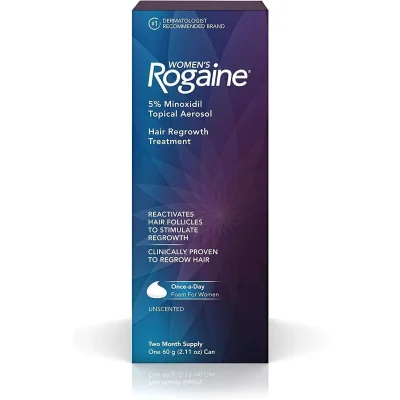
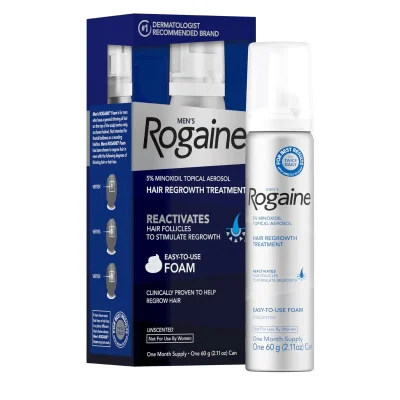
For women who prefer a foam, there is Rogaine Women's 5% Foam, designed for hereditary hair loss in women.
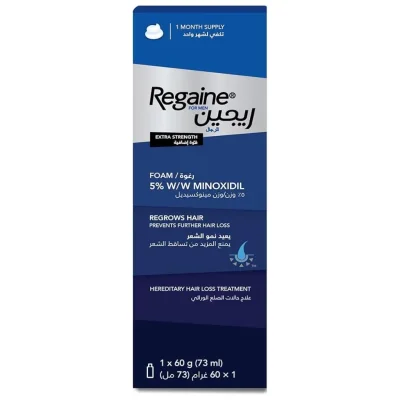
For men, there is Regaine for Men 5% Foam, intended for hereditary hair loss in men.
Quick comparison of the options
| Type | Usually suits | Notes |
|---|---|---|
| Minoxidil 2% (solution or spray) | Women, per the label | A common starting option for women; needs regular use |
| Minoxidil 5% foam for men | Adult men | Foam dries faster and may be gentler on a sensitive scalp |
| Minoxidil 5% foam for women | Adult women, per the label | A women-specific formula; follow the number of applications on the leaflet |
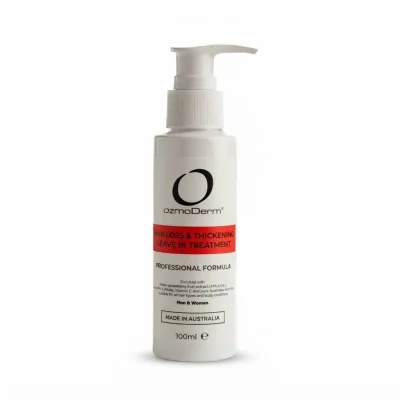
| Strengthening shampoo and tonic | Everyone, as supportive care | Improves the look of hair and reduces breakage, but does not treat hereditary hair loss on its own |
What to expect after starting minoxidil
- Temporary shedding at first: in the first weeks shedding may increase a little. This usually happens because weak hairs fall out to make room for new ones, and it generally settles within weeks. Do not stop treatment because of it without advice.
- Patience is needed: you usually need 3 to 6 months of regular use before judging the result.
- Continuing is essential: minoxidil does not cure the hereditary cause; it works only while you use it. If you stop, shedding gradually returns over months and the improvement is lost.
- Apply it to a dry scalp, wash your hands well afterwards, and keep it away from your eyes and face.
Possible side effects
Most side effects are mild and local, such as itching, dryness, flaking and scalp redness. The solution may irritate some sensitive scalps more than the foam. Some women may notice extra facial hair if the product reaches the face, so apply it carefully.
Stop using it and see a doctor right away if you notice palpitations or a fast heartbeat, chest pain, dizziness or fainting, sudden swelling of the hands or feet, or rapid weight gain.
Who should not use minoxidil without a doctor's advice?
- Pregnant and breastfeeding women.
- Anyone with heart disease or blood pressure problems.
- Anyone with inflammation, wounds, sunburn or a skin disease on the scalp.
- Anyone under 18.
- Anyone who does not know the cause of their hair loss, or whose hair loss is sudden or patchy.
Shampoos and tonics: support, not a replacement
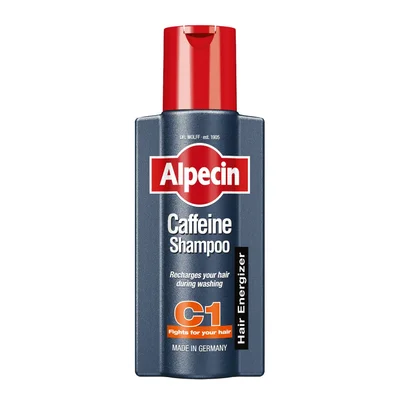
Strengthening shampoos and tonics can help improve how hair looks, reduce breakage and care for the scalp. But they are supportive products: they do not replace minoxidil for hereditary hair loss, and they do not treat iron deficiency or a thyroid problem. One option we carry is Alpecin C1 Caffeine Shampoo, which can be used as part of a daily hair-care routine.
When should you see a doctor?
- If the hair loss is sudden and heavy, or comes as round bald patches.
- If it comes with pain, severe itching, redness, thick scales or pus on the scalp.
- If you see smooth, shiny skin where hair used to be, which may be a sign of scarring that needs early treatment.
- If the hair loss is in a child.
- If it comes with severe tiredness, irregular periods, acne or extra body hair in a woman, or a change in weight.
- If you see no improvement after 6 months of regular use.
Frequently asked questions
Does minoxidil regrow hair for everyone?
No. The response varies from person to person. Some users notice new hair, others only benefit from reduced shedding, and some do not respond. It is best suited to hereditary hair loss.
Can women use the 5% strength?
There are 5% products made for women, such as Rogaine Women's Foam. What matters is that a woman uses a product whose label says it is for women, follows the number of applications on its leaflet, and does not use the men's product.
Why did my shedding increase after I started treatment?
This is a well-known temporary shedding in the first weeks, and it often means the follicles are starting a new growth cycle. If it lasts more than about two months or is severe, ask the pharmacist or a doctor.
Does hair loss after childbirth need minoxidil?
Usually not, because it is temporary shedding that improves with time. Also, minoxidil should not be used while breastfeeding without a doctor's advice. What matters most here is good nutrition and checking iron levels if your doctor requests it.
If you have a question about your type of hair loss or which product suits you, message the pharmacist at GH Pharmacy on WhatsApp and we will be glad to help.