Iron-deficiency anaemia is one of the most common health problems we see at the pharmacy, especially in women, pregnant women and children. Many people live with it for months, thinking the tiredness is "normal". This guide explains what anaemia is, how to tell whether it is caused by low iron rather than something else, how to choose and take an iron supplement with less constipation and stomach upset, and when to see a doctor.
What is anaemia?
Anaemia means your blood's haemoglobin level is lower than normal. Haemoglobin is the protein inside red blood cells that carries oxygen from the lungs to the rest of the body, and iron is a key part of it. When iron runs low, the body cannot make enough haemoglobin, so less oxygen reaches your muscles and brain.
According to the World Health Organization, anaemia is roughly defined as haemoglobin below 12 g/dL in women, below 11 during pregnancy, and below 13 in men. Labs vary slightly, and your doctor interprets the result alongside your other tests.
Why does iron run low?
- Heavy periods: the most common cause in women of child-bearing age.
- Pregnancy and breastfeeding: iron needs rise sharply, especially in the second and third trimesters.
- Rapid growth: in babies, children and teenagers.
- Diet: little meat, or a diet heavy in bread, rice and tea.
- Poor absorption: for example coeliac disease, or after stomach surgery.
- Hidden bleeding from the gut: such as a stomach ulcer, piles or bowel disease. This matters most in men and in women after menopause.
Symptoms of iron deficiency
- Ongoing tiredness and low stamina, even with enough sleep.
- Pale face, inner eyelids and lips.
- Breathlessness or a racing heart when climbing stairs or walking fast.
- Dizziness, headaches and poor concentration.
- Hair shedding, and brittle or spoon-shaped nails.
- Cold hands and feet.
- Cravings for unusual things such as ice, clay or starch.
- In children: poor appetite, slow growth and irritability.
These symptoms can have other causes. A blood test is what confirms the reason.
The important tests
- Full blood count (CBC): shows haemoglobin and red cell size (MCV). In iron deficiency the cells are usually small and pale.
- Ferritin: reflects your iron stores and is the key test for confirming deficiency. A low value usually means iron deficiency, even if haemoglobin is still normal. Note that ferritin can rise temporarily with infection or inflammation and look normal despite a deficiency.
- Serum iron, TIBC and transferrin saturation: help your doctor complete the picture.
An important point for Iraq: not all anaemia is iron deficiency
Carrying the thalassaemia trait (thalassaemia minor) is common in Iraq, and it also causes small red blood cells that look like iron deficiency on a blood count. The difference is that iron stores (ferritin) are normal or high. Taking iron in this situation does not help and can lead to iron building up over time. So do not start an iron supplement just because your haemoglobin is low. Check ferritin first, and ask your doctor about haemoglobin electrophoresis if thalassaemia runs in your family.
Types of iron supplement
| Type | What stands out | What to know |
|---|---|---|
| Ferrous sulphate | The oldest and most studied, effective and affordable | Can cause constipation or nausea in some people |
| Iron bisglycinate | Gentler on the stomach for many people | Usually more expensive |
| Slow-release formulas | May cause less stomach upset | Absorption is sometimes lower |
| Liquids and drops | Suit children and people who struggle to swallow | Can stain teeth temporarily; rinse your mouth afterwards |
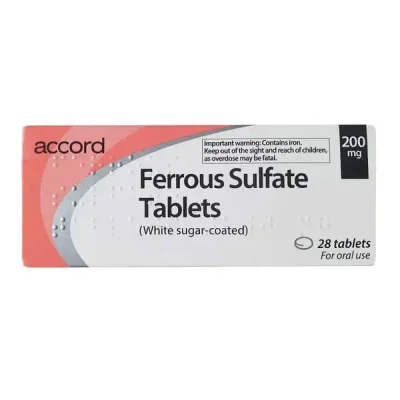
The classic choice is Actavis Ferrous Sulphate 200mg, which according to its description is intended to treat and prevent iron deficiency and anaemia.
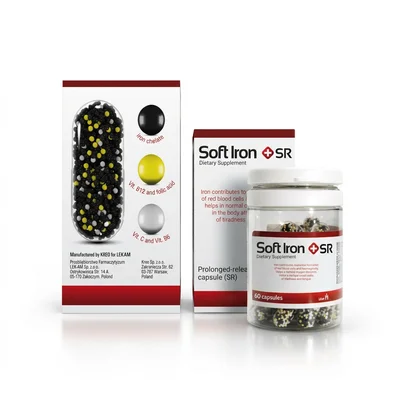
For people who find ordinary iron hard on the stomach, Lekam Soft Iron + SR is a sustained-release formula designed, according to its description, to reduce stomach upset.
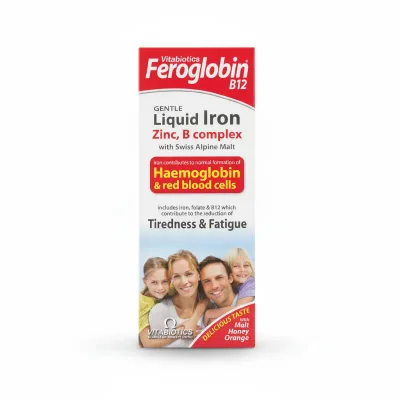
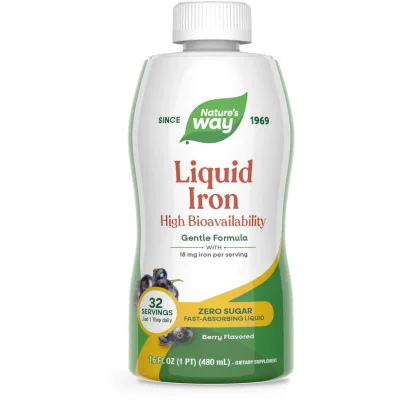
For adults who prefer a liquid, Vitabiotics Feroglobin B12 Liquid combines iron with B vitamins and other minerals.
For babies and children, SiderAL Drops contain sucrosomial iron made for children, according to their description. The paediatrician sets the dose by weight and age.
How to take iron properly
- Your doctor sets the dose based on how low you are. Many doctors now prescribe a single dose once a day or every other day, because absorption is better and stomach upset is lower than splitting it through the day.
- Iron is absorbed best on an empty stomach. If it makes you feel sick, take it with a light snack. Sticking with it matters more than perfect absorption.
- Take it with orange juice or food rich in vitamin C.
- Leave two hours between iron and tea, coffee, milk, calcium supplements and antacids.
- Leave a gap between iron and thyroid medicine (levothyroxine) and some antibiotics. Ask your pharmacist about timing.
- Dark stools are normal with iron. Black, sticky stools with dizziness or stomach pain need urgent attention.
- Treatment does not stop as soon as haemoglobin improves. It usually continues for several weeks or months afterwards to refill your stores, as your doctor advises.
Iron-rich foods
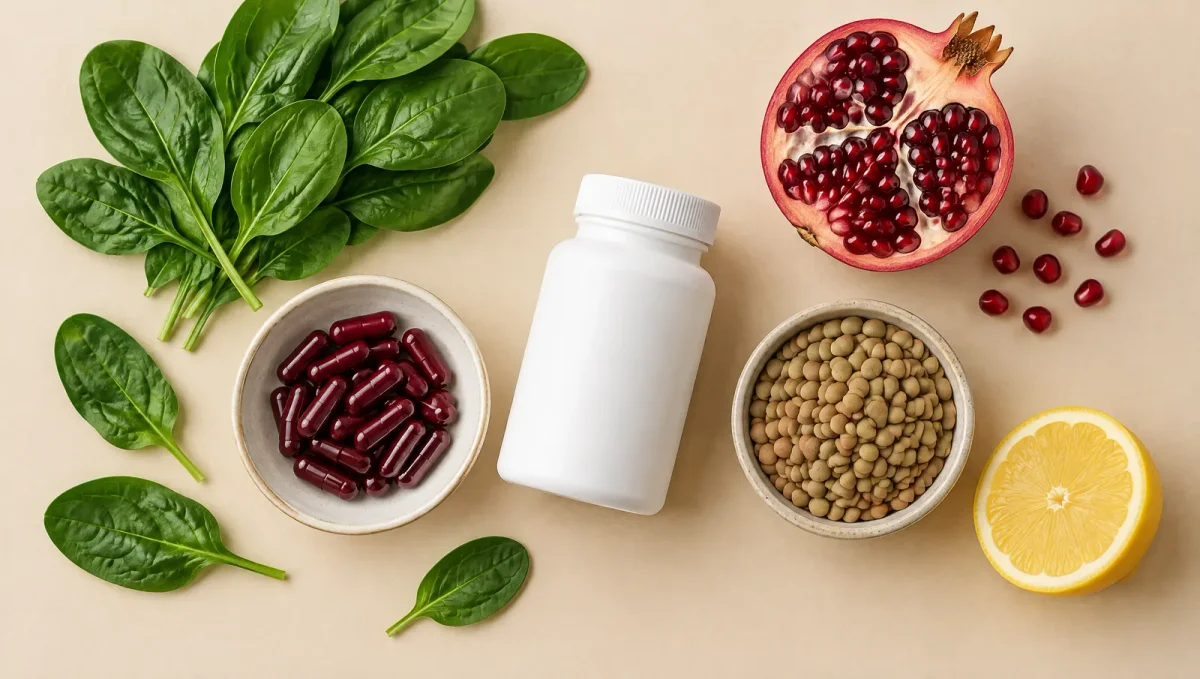
Iron from red meat, liver, chicken and fish is absorbed much better than iron from plants. Plant sources such as lentils, chickpeas, beans, spinach, dates and dried apricots help too, especially when eaten with salad and lemon or fruit rich in vitamin C. Food is important for prevention, but on its own it usually cannot treat a confirmed deficiency.
Warning: iron is dangerous for young children
Iron tablets are one of the most common causes of serious poisoning in children, because they can look like sweets. Keep them out of children's reach, in their closed pack. If a child swallows iron tablets, go to the emergency department straight away, even if they seem fine.
When should you see a doctor?
- If your haemoglobin is very low, or you have severe breathlessness, chest pain or fainting.
- If you are a man, or a woman after menopause, with iron-deficiency anaemia, because the doctor needs to look for a source of bleeding.
- If your periods are very heavy or long.
- If your haemoglobin has not improved after about a month of regular treatment.
- If you notice blood in your stool, black sticky stools or unexplained weight loss.
- For pregnant women and children, before starting any supplement.
Frequently asked questions
How soon will I feel better on iron?
Many people notice more energy within two to three weeks, and haemoglobin starts to rise within a few weeks, but refilling iron stores usually takes three months or more.
Iron makes me constipated. What can I do?
Drink enough water, eat more vegetables and fruit, and try taking it with a light snack or every other day after checking with your doctor. Sometimes simply changing the type of supplement is enough.
Can I take iron with calcium?
It is best to separate them by at least two hours, because calcium reduces iron absorption.
Does iron deficiency cause hair loss?
It can contribute in some people, and correcting it is part of treating hair loss. But hair loss has many causes, and it is best assessed with your doctor.
Is iron safe in pregnancy?
Yes. Iron needs rise in pregnancy, and your doctor sets the dose based on your tests. See also our guide to pregnancy vitamins.
If you have a question about your test result or which type of iron suits you, message Green Heart Pharmacy on WhatsApp and we will be glad to help.