Oily skin shines a few hours after washing, has more visible pores, and tends toward blackheads and spots, especially in the Iraqi heat. The good news is that it usually ages more slowly, and a simple, consistent routine controls shine a lot. This guide explains why skin is oily, the mistakes that make it oilier, an easy daily routine, and the ingredients that help.
Why is skin oily?
Under the skin are oil glands that produce sebum, which protects and moisturises the skin. In some people these glands are more active than in others because of:
- Genetics: the main factor behind skin type.
- Hormones: which is why oil increases in adolescence, before periods, and with polycystic ovary syndrome.
- Hot, humid weather: it increases oil and shine in summer.
- Harsh cleansing: stripping the skin of its oil makes it try to replace it, so shine increases instead of decreasing.
Oily skin is a skin type, not a disease. The aim is not to "dry it out" but to balance it and prevent clogged pores.
Oily, combination or "oily but dehydrated"?
Before choosing products, check your skin type:
- Oily: shine across almost the whole face within hours, with visible pores on the cheeks too.
- Combination: oil on the forehead, nose and chin (the T-zone), while the cheeks are normal or dry. Use light products all over, and the cheeks may need a slightly richer moisturiser.
- Oily but dehydrated: shine together with tightness and flaking, usually caused by a harsh cleanser or strong treatments without moisturiser. The fix is gentler cleansing and a light moisturiser, not more drying products.
A simple test: wash your face with a gentle cleanser, apply nothing, and look after an hour. Where does shine appear, and where does your skin feel tight?
Oily skin in summer and winter
In the Iraqi summer: heat and sweat increase shine and clogged pores. Choose light gel textures, use fewer layers, reapply sunscreen with a fluid or spray, and wash your face after heavy sweating or exercise. Try not to touch your face with your hands or phone too often.
In winter: air conditioning and heating dry the skin, so you may need a slightly richer moisturiser at night and less frequent exfoliation. Do not keep the same harsh routine all year if your skin feels tight.
Mistakes that make skin oilier
- Washing more than twice a day, or with harsh soap.
- Toners with a lot of alcohol.
- Skipping moisturiser because your skin is oily.
- Rubbing hard or using gritty scrubs every day.
- Heavy creams and oils on the face, and makeup that clogs pores.
- Squeezing blackheads with your fingers.
The daily routine
Morning
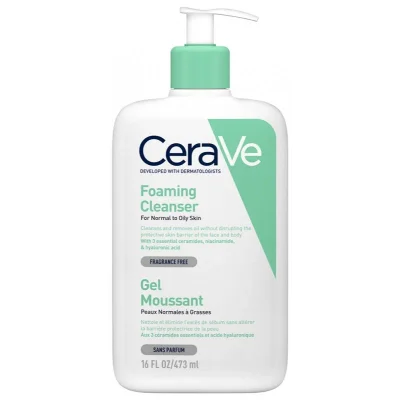
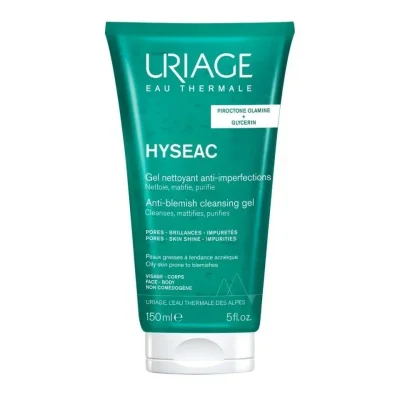
- A gentle cleanser for oily skin: a gel or foam that cleans without leaving skin tight.
- A light moisturiser that is oil-free and non-comedogenic, ideally a gel texture.
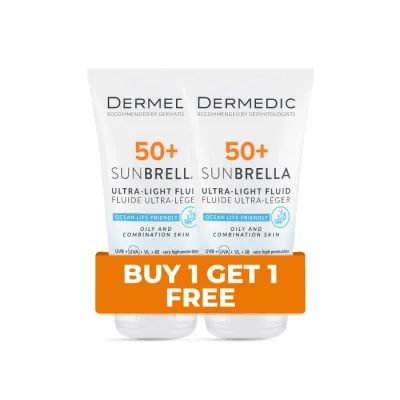
- A light sunscreen in fluid or gel form. This is the most important step. See our guide to choosing a sunscreen.
Evening
- Remove makeup and sunscreen, then use the same cleanser.
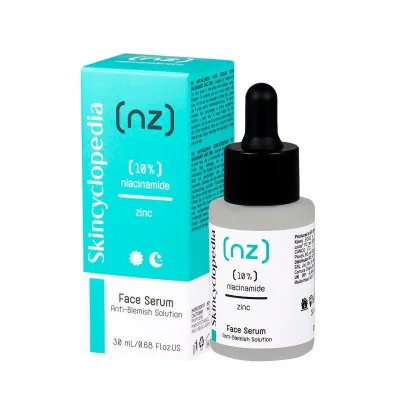
- Your treatment product if you use one (such as salicylic acid or niacinamide).
- A light moisturiser.
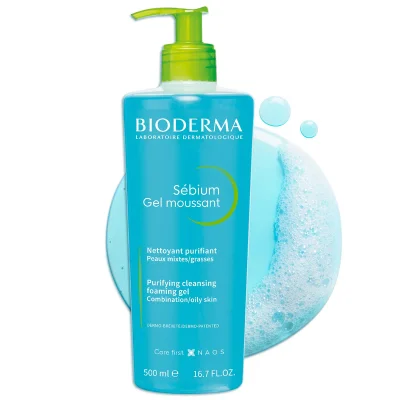
For daily cleansing, Bioderma Sébium Purifying Foaming Gel from our shelves is a cleanser made for oily, combination and acne-prone skin that helps regulate oil, according to its description.
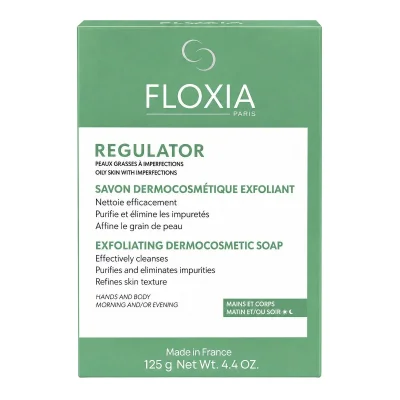
If you prefer a bar, Floxia Regulator Exfoliating Soap contains salicylic acid and glycolic acid for gentle exfoliation and oil control, according to its description. Start once a day, and if your skin feels dry or red, cut back to every other day.
The key ingredients for oily skin
- Salicylic acid (BHA): dissolves in oil and cleans inside the pores. Excellent for blackheads.
- Niacinamide: may reduce oil production and the look of pores, and is gentle on most skin types.
- Clay (kaolin and bentonite): absorbs excess oil. Use as a mask once or twice a week.
- Fruit acids (such as glycolic acid): gentle chemical exfoliation that improves skin texture. They make skin more sun-sensitive, so do not skip sunscreen.
- Retinoids: regulate cell turnover and reduce clogged pores, but must not be used in pregnancy or when planning one.
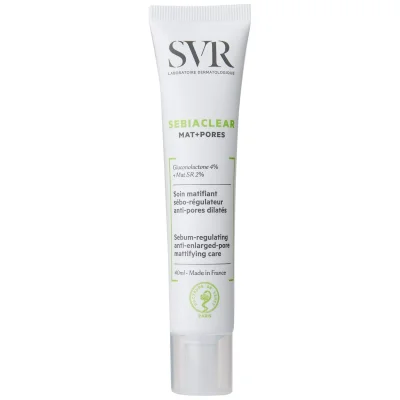
To reduce shine during the day, SVR Sebiaclear Mat + Pores is made for oily and blemish-prone skin and helps purify the skin and reduce the look of enlarged pores, according to its description.
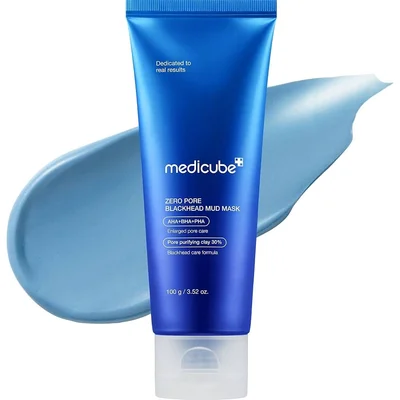
Once or twice a week, a clay mask soaks up excess oil. Medicube Zero Pore Blackhead Mud Mask contains five types of clay, including kaolin and bentonite, to clean pores and reduce blackheads, according to its description. Do not leave it on until it cracks completely. Rinse it off before it pulls your skin too tight.
Makeup and oily skin
- Choose a light foundation labelled "oil-free" or "non-comedogenic".
- Blotting papers are better than adding layer after layer of powder during the day.
- Remove all makeup every night, and clean your makeup brushes weekly.
Oily skin and acne
Oily skin is more prone to spots, but not everyone with oily skin has acne. If you get repeated inflamed spots, see our guide to acne treatment.
When should you see a doctor?
- Repeated inflamed or deep spots, or scars starting to form.
- Sudden oiliness with irregular periods or extra facial hair, which may point to a hormonal cause.
- Redness with greasy yellow scales around the nose and eyebrows, which may be seborrhoeic dermatitis and needs specific treatment.
- Persistent facial redness with spots but no blackheads, which may be rosacea rather than acne.
Frequently asked questions
Does oily skin really need moisturiser?
Yes. A light moisturiser protects the skin barrier, reduces irritation from cleansers and treatments, and may reduce rebound shine.
How often should I exfoliate?
Gentle chemical exfoliation can be used several times a week, depending on how your skin tolerates it. Harsh gritty scrubs are best avoided or used rarely.
Does drinking water reduce oil?
Drinking water matters for your health, but it does not clearly change how much oil your glands produce.
Does oily skin change with age?
Yes. Oil usually decreases gradually with age, and skin may become combination or normal.
Can I use oils on oily skin?
Some light oils cause no problems for some people, but it is simpler and safer to choose oil-free products if you get blackheads or spots.
If you are not sure of your skin type or the right routine for it, message Green Heart Pharmacy on WhatsApp and we will be glad to help.